
Roofing Scams That Should Scare South Florida Homeowners More Than Halloween
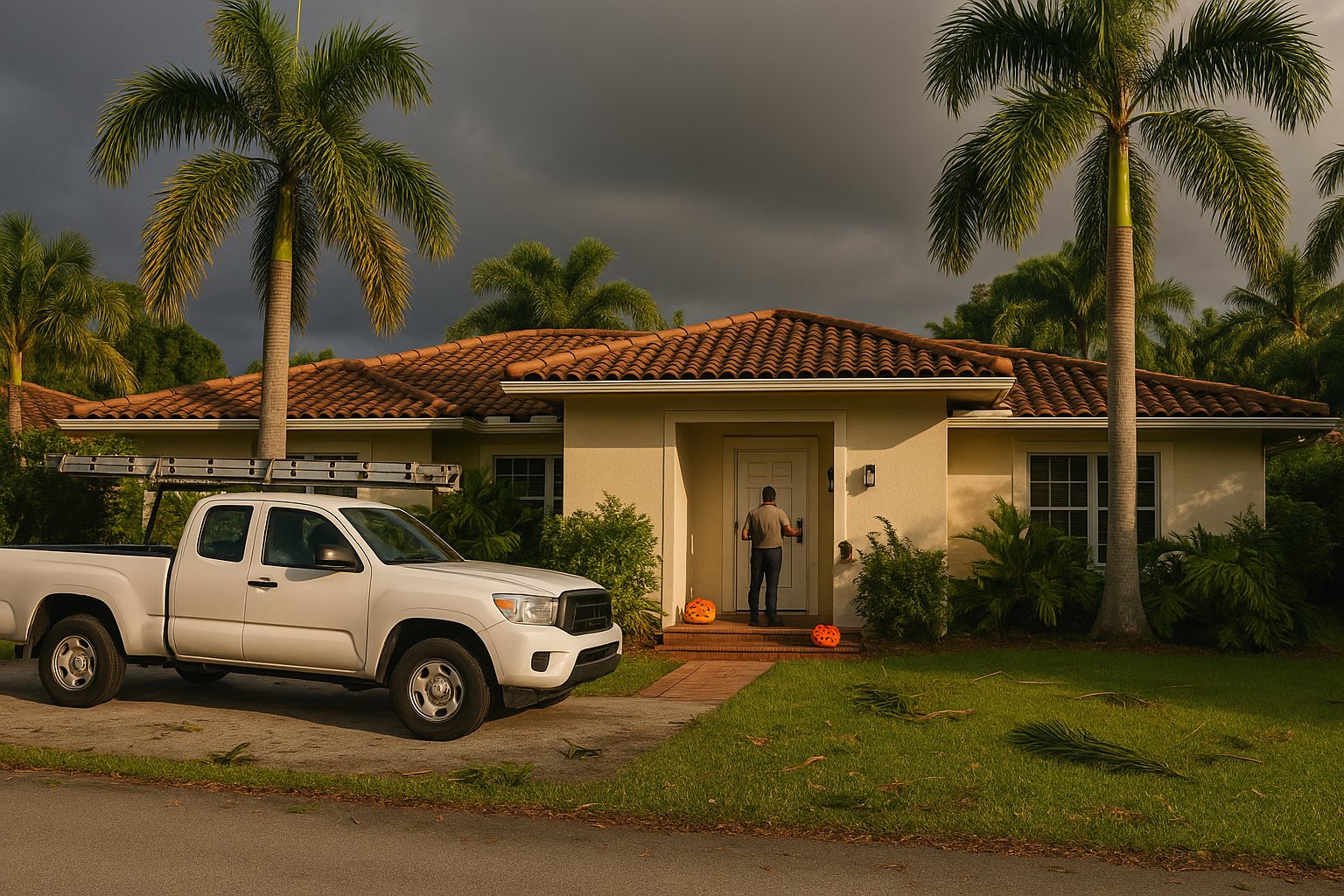
Halloween is the one night a year when a stranger at the door is part of the fun. The rest of the year, especially after a storm rolls through Miami-Dade or Broward, an unexpected knock can be the start of a very expensive problem.
We have been replacing and repairing roofs in South Florida since 2004, and every season we meet homeowners who paid someone else first. Some lost a deposit. Some ended up with an unpermitted roof that their insurance company would not cover. A few found themselves tangled in an insurance claim they never meant to file. The scams change shape, but the warning signs stay the same. Here are the ones we see most often.
Thinking about a new roof or a repair? Schedule a free estimate or call 305-639-7663.
1. The Knock Right After the Storm
Within a day or two of a hurricane or a bad thunderstorm, crews start working the neighborhoods. Some are legitimate. Many are "storm chasers" who travel from one disaster area to the next, sign as many contracts as they can, and are gone before the first warranty question comes up.
Watch for out-of-state license plates, trucks with no company name on them, and anyone who says they "noticed damage" on your roof while driving by. Damage that can be seen from a moving car is rare. A good roofer will tell you what they found on the roof and show you photos, not just tell you that you need a new one.
2. "We Will Cover Your Deductible"
This line sounds generous. In Florida it is against the law. Under Section 489.147 of the Florida Statutes, a contractor cannot offer to waive your insurance deductible, and cannot offer cash, gift cards, rebates or anything else of value to get you to file a roof claim or agree to an inspection. The required contract notice puts it plainly: waiving a deductible is felony insurance fraud.
A contractor willing to break that rule on day one is telling you how the rest of the job will go.
3. "Let Me Handle the Insurance for You"
A roofer can document damage and give you an itemized estimate. What a roofer cannot do, unless they also hold a public adjuster license, is interpret your policy, advise you on your coverage, or adjust the claim on your behalf. That is also in Section 489.147.
You may also be handed an "assignment of benefits" form, which signs your insurance payout over to the contractor. For residential policies issued on or after January 1, 2023, Florida no longer allows that assignment. If someone asks you to sign one, call your insurance company before you sign anything. For a clear walkthrough of how a legitimate claim works, see our step-by-step guide to roof insurance claims.
4. A Big Cash Deposit, Today
Florida does not set a maximum deposit for roofing work. It does set rules for what happens after a large one. Under Section 489.126, a contractor who takes more than 10 percent of the contract price up front generally has to apply for the permit within 30 days of payment and start the work within 90 days after the permit is issued. Walking away with the money can be a felony depending on the amount.
Be careful with anyone who wants cash, wants the check made out to a person instead of a company, or wants most of the price before a permit has even been pulled. Pay a business, by check or card, and keep the receipt.
5. "You Do Not Need a Permit for This"
A roof replacement in South Florida needs a permit. So does most repair work beyond a small patch. The permit is what brings a building inspector to your house to confirm the work meets the Florida Building Code, which matters a great deal in a county where roofs are designed for hurricane force wind.
When a contractor offers to skip the permit to save you money, what they are usually saving is their own time and the risk of an inspector seeing their work. An unpermitted roof can also cause trouble later with your insurance company or when you sell the house.
6. The Leftover Materials Deal
"We just finished a job down the street and have material left over. We can do your roof this afternoon for half price." It is one of the oldest lines in the business. Real roofing materials are ordered for a specific roof, and a real roof replacement is not something that gets scheduled from your driveway. The usual result is a thin coat of something over the old roof and a crew you never see again.
7. Pressure to Sign Before They Leave
"This price is only good today." "My manager only approved it if you sign now." Pressure is the common thread in almost every scam on this list, because a homeowner who has a day to think tends to make a phone call or two. A reputable contractor will leave you a written estimate and let you take your time.
How to Check a Roofer in About Five Minutes
You do not need to be an expert to protect yourself. These checks are free and most take less than a minute.
- Look up the license. Go to myfloridalicense.com and search the company or the license number. A state certified roofing contractor license starts with CCC. Make sure the license is active and the name matches the name on the contract. You can check ours the same way: CCC1326032.
- Check the permit history. Ask which building department will issue the permit, then look up the contractor or your address once the work is filed. In Miami-Dade, the county issues permits for unincorporated areas, but many cities and villages run their own building departments. Homeowners in Pinecrest and Palmetto Bay, for example, will find their permits with the Village of Pinecrest and the Village of Palmetto Bay, not the county. Both villages also require contractors to register with them before pulling a permit, so a roofer who does not know that is a roofer who has not worked there.
- Get the insurance certificate from the insurer. Ask for a certificate of general liability insurance and workers' compensation coverage, and confirm it by calling the insurance company listed on it. A printout alone can be outdated or fake.
- Find a real address. Look up the business address and the reviews. A company with a local office and years of reviews from your area has something to lose. A phone number and a truck do not.
- Read the contract. Florida requires roofing contracts to include an itemized, good faith estimate of the work and materials. If yours is a single line with a single number, ask for more detail before you sign.
For the broader question of how to compare honest contractors against each other, we cover experience, warranties and reviews in 10 Tips to Choosing a Pro Roofer in Miami.
If You Already Signed
Do not panic, and do not hand over more money until you have checked the license and the permit. If the contract was signed within 180 days of a state of emergency declared by the Governor, and your home is in the area the declaration covers, Section 489.147 gives you the right to cancel a roof repair or replacement contract without penalty within 10 days of signing or by the official start date of the work, whichever comes first. Send the cancellation in writing and keep a copy.
If you believe a contractor took your money and disappeared, or is working without a license, you can file a complaint with the Florida Department of Business and Professional Regulation at myfloridalicense.com and report it to your local police department.
Frequently Asked Questions
Is it a red flag when a roofer knocks on my door?
Not by itself. Some legitimate companies do canvass neighborhoods. The red flags are what comes next: an offer to cover your deductible, a request for cash, pressure to sign the same day, or a claim that no permit is needed.
Can a roofer pay my insurance deductible in Florida?
No. Florida law prohibits contractors from waiving or paying a homeowner's insurance deductible, and from offering gifts or cash to encourage a roof claim. A contractor who offers this is breaking state law.
How do I know if my roofer pulled a permit?
Ask for the permit number, then look it up on the website of the building department that issued it, which may be your city or village rather than Miami-Dade or Broward County. The permit card should also be posted at the job site while work is underway.
How much of a deposit is normal for a roof in Florida?
Florida does not set a maximum. What the law does say is that a contractor who collects more than 10 percent up front must apply for the permit within 30 days and begin work within 90 days after the permit is issued. Whatever the amount, it should go to a licensed business and be spelled out in a written contract.
T&S Roofing Systems is a GAF Master Elite contractor licensed in Florida (CCC1326032), serving all of Miami-Dade and Broward from our offices in Miami and Pembroke Pines. If someone has already been by your house with an offer that does not sit right, we are happy to give you a second opinion. Request a free estimate or call 305-639-7663.